Financial Risk Assessments: A Regulatory Guide for UK Firms
Published
You're preparing a UK authorisation application, and the business plan looks coherent. The products are defined, the governance chart is populated, and the financial model appears reasonable. Then the FCA asks how you've assessed the risks created by your customer base, jurisdictions, transaction flows, distribution channels, liquidity profile and control environment. The risk assessment is no longer supporting paperwork. It becomes evidence of whether management understands the business it wants permission to operate.
That's where many applications weaken. The document describes broad categories, but it doesn't explain how risks were identified, who owns them, how controls operate, or what changes would trigger a reassessment. A credible financial risk assessment must connect the commercial model to supervisory judgement, operational decisions and financial resources.
Table of Contents
- Understanding the Role of Financial Risk Assessments in Regulation
- A Stepwise Methodology for Conducting Financial Risk Assessments
- Key Factors the FCA Evaluates in Your Risk Assessment
- Static Paperwork Versus Living Control Systems
- Linking Risk Findings to Stress Testing and Capital Adequacy
- Practical Next Steps for Compliance and Risk Teams
Understanding the Role of Financial Risk Assessments in Regulation
A financial risk assessment is one of the documents that exposes whether an authorisation file reflects the proposed business or merely satisfies a checklist. FCA reviewers compare it with the business plan, policies, governance arrangements and financial projections. Inconsistencies are easy to spot. An international customer base paired with domestic-only analysis, or complex payment and digital-asset services supported by a generic fraud section, leaves the reviewer asking how management reached its conclusions.
The FCA's supervision data shows why those conclusions matter. In its 2023/24 anti-money laundering and counter-terrorist financing supervision report, the regulator recorded about 17,200 firms under AML/CTF supervision. Around 3,000 were categorised as high risk, roughly 8,950 as medium risk and about 5,100 as low risk. Approximately 9% of the supervised population was categorised as high risk, down from about 10% in the previous reporting period. The FCA also completed 816 desk-based reviews and 21 onsite visits during the year. These figures show that risk assessments inform supervisory prioritisation and scrutiny. (FCA AML and CTF supervision report)
What the document needs to prove
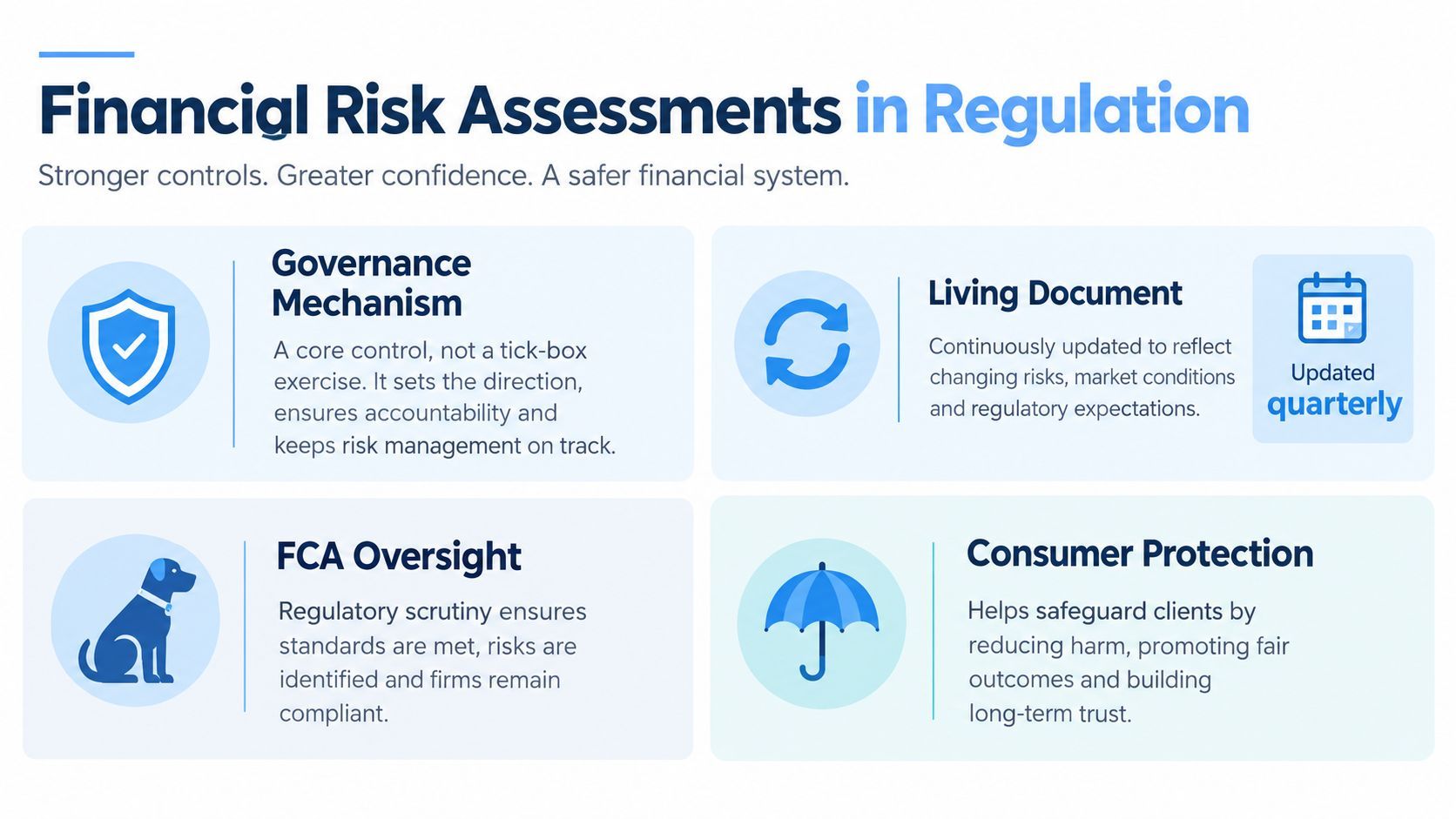
The assessment should give senior management a usable view of exposure. It must show how the firm's activities create risks, how controls address them, what residual risk remains, who owns the decisions and what happens when the business changes. Reviewers should be able to follow the reasoning from a material exposure to a control, an accountable owner and supporting evidence.
The FCA expects assessments to be adapted to the firm's business model, with attention to products, services, jurisdictions, customer types, transaction complexity and distribution channels. Firms should distinguish inherent risk, control effectiveness and residual risk, using qualitative and quantitative inputs where appropriate. (FCA guidance on financial crime systems and controls)
That turns the assessment into a working governance tool. The board or governing body can use it to approve risk appetite, challenge assumptions, allocate resources and decide whether a proposed activity is ready to launch. The file should also identify the evidence expected to support those decisions, such as monitoring records, reconciliations, testing results, management information and remediation logs.
For firms preparing an authorisation file, regulatory authorisation work can help align the business plan, risk framework, controls and evidence into one submission package. The practical test is whether a responsible manager can explain the assessment clearly and show that the documented controls operate in the proposed business.
A Stepwise Methodology for Conducting Financial Risk Assessments
A useful methodology starts with the business, not with a pre-existing risk register. The assessment should follow the logic of the proposed operating model and then test whether the firm's controls and resources are proportionate to the exposure.
Start with the operating model
Map the activities the firm will perform, the permissions it needs, the customers it will serve, the countries involved and the parties on which it depends. Include the transaction journey from onboarding through execution, settlement, reconciliation, complaints and exit. This prevents the assessment from focusing only on the product label while missing risk created by delivery arrangements.
Record assumptions explicitly. For example, a firm might assume that customers will be screened before activation, that a third party will perform transaction monitoring, or that client money will be reconciled through a particular process. Each assumption should have an owner and supporting evidence.
Identify risks from actual exposure
Build the risk universe from the mapped model. Consider financial crime, credit, market, liquidity, operational, conduct, outsourcing, cyber, technology, legal and prudential exposures where they are relevant to the activities. Don't list categories just to make the document look complete. Explain how each risk could arise in this firm.
A useful risk statement has three parts:
- Cause: the feature of the business that creates exposure.
- Event: what could happen if the exposure materialises.
- Consequence: the financial, customer, operational or regulatory harm that may follow.
“Fraud risk exists” is weak. “Rapid account opening through remote onboarding could allow an unidentified person to access payment services, creating financial crime, customer and regulatory exposure” gives management something to assess and control.
Analyse inherent and residual risk
Assess the exposure before controls, then assess what remains after controls operate. The difference matters. A firm may have a high inherent risk because it serves customers across multiple jurisdictions, but its residual risk may be lower if onboarding, monitoring, escalation and independent testing are properly designed and evidenced.
Don't confuse a control's existence with its effectiveness. A written policy proves that management has described an intended process. It doesn't prove that staff follow it, that alerts are reviewed, or that exceptions reach the right decision-maker.
Test the control environment
For each material risk, identify the preventive and detective controls, control owner, frequency, evidence and escalation route. Ask how the control works in practice. Review sample records, management information, training records, quality assurance results, reconciliations, incident logs and committee minutes where they exist.
Where a control is still being built, label it as to be established. Authorisation reviewers are more likely to accept an honest implementation plan than a document that presents an untested future process as operational fact.
Report decisions and maintain the assessment
The final document should show the assessment date, scope, methodology, contributors, approvals, open actions and review triggers. Every action needs an owner, target date and status. A risk with no decision, owner or follow-up is an observation, not a functioning control mechanism.
Practical rule: If a risk finding doesn't change a decision, assign an action, alter a control or affect financial resources, the assessment may be describing the business rather than managing it.
Key Factors the FCA Evaluates in Your Risk Assessment
A firm can submit a polished risk matrix and still struggle in authorisation if its ratings do not reflect the proposed business. The FCA tests the connection between activities, exposure and evidence. Each material rating should be explainable to a reviewer who has compared it with the business plan, operating model and supporting documents.
Products and services
Describe what the firm will do, including features that alter the risk profile. Payment initiation, custody, lending, investment services, exchange activity and token-related services involve different exposures. Transaction speed, reversibility, access arrangements, complexity and reliance on intermediaries should all affect the analysis.
Support the assessment with product descriptions, customer journeys, relevant transaction limits, flow diagrams, safeguarding or custody arrangements and new-product approval records. Map controls to each service. A single enterprise-wide policy rarely demonstrates how risks differ between products.
Jurisdictions and distribution channels
Geography requires more than listing countries. Assess customer locations, payment routes, provider locations, and where the firm's staff and systems operate. Explain how the model addresses higher-risk jurisdictions, cross-border activity, remote onboarding, agents, introducers, outsourced operations and digital distribution.
The risk assessment must match the application. If the business plan describes international growth while the assessment assumes a narrow domestic model, reconcile those assumptions before submission. That inconsistency often raises questions about whether the assessment reflects the intended business or only its easiest version.
Customers and counterparties
Segment customers using characteristics that change exposure. Depending on the model, relevant factors may include retail or professional status, corporate structure, beneficial ownership, politically exposed person status, source of funds, financial sophistication, vulnerability and expected transaction behaviour.
A customer risk label is not enough. State what information the firm collects, how it verifies it, when enhanced checks apply and how risk can change over time. Include banks, liquidity providers, custodians, technology vendors and other counterparties where their failure could affect the firm's obligations.
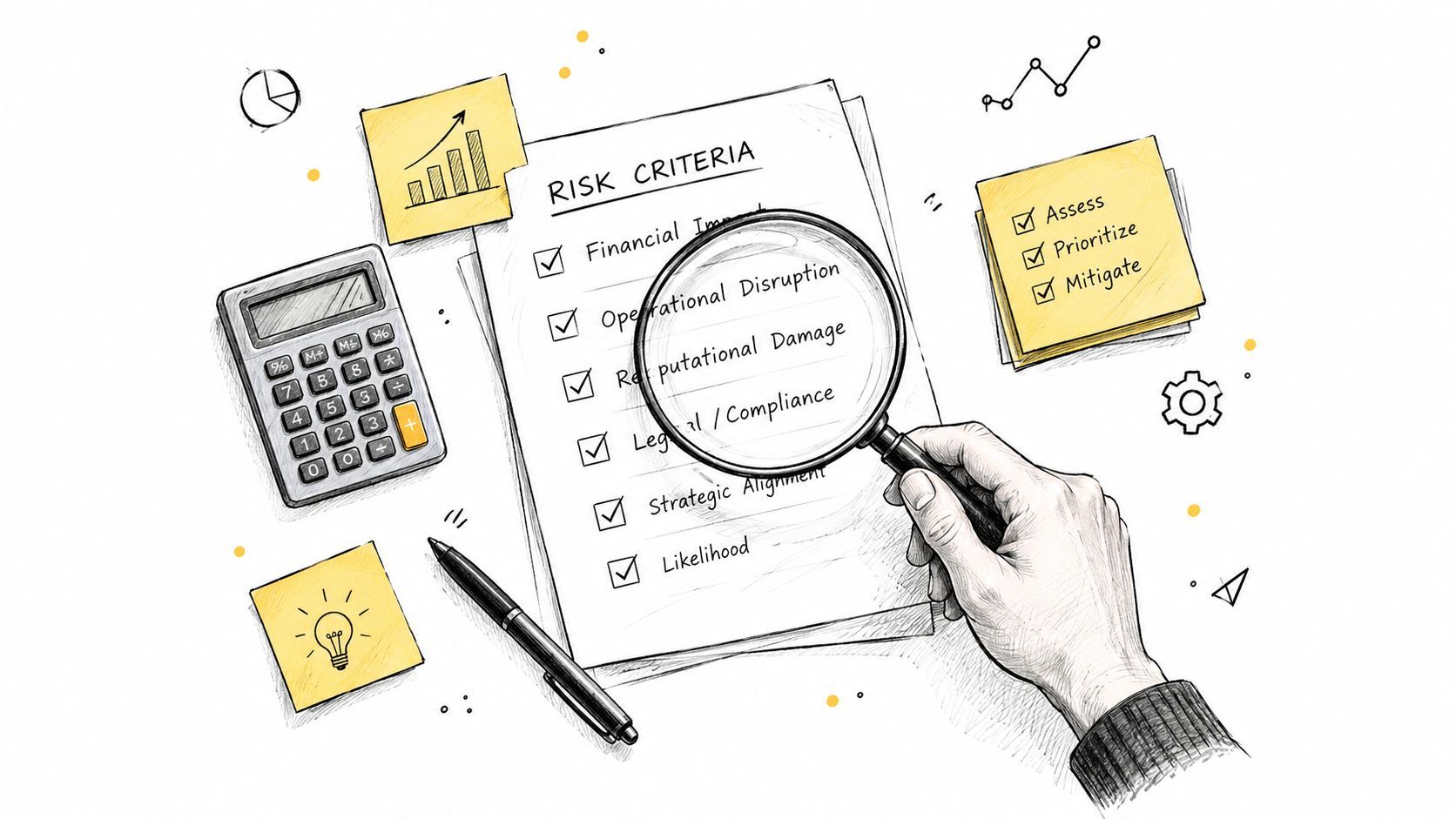
Transaction complexity and control effectiveness
Complexity may result from rapid transactions, multiple parties, nested relationships, unusual settlement arrangements, programmable features or limited transparency. Show how the firm identifies anomalies, who investigates them and what information supports the resulting risk rating.
The FCA expects firms to consider more than fraud. Money laundering, sanctions, bribery, proliferation financing and terrorist financing may also be relevant. Stronger assessments distinguish inherent risk, control effectiveness and residual risk, using both qualitative and quantitative information where available, as set out in the FCA Handbook risk assessment expectations.
Define the evidence behind each rating. Management information, alert volumes, exception records, complaints, reconciliation breaks, control testing and incidents can show whether the claimed residual risk is credible. If the evidence cannot support the score, lower the confidence in the rating or revise the assessment before the FCA has to ask for it.
Static Paperwork Versus Living Control Systems
A risk assessment can look complete in an authorisation file and still fail in operation. It may contain a title page, approval date, risk matrix and conclusion that controls are adequate. The weakness appears when the firm launches a product, changes its customer base or relies on a new technology provider, while the assessment remains unchanged.
A living control system has named owners, review triggers, management information, action tracking and a direct connection to business decisions. A material change should prompt the firm to reassess the affected exposure rather than wait for the next scheduled document refresh. The record should show what changed, who considered it and what decision followed.
The weaknesses the FCA keeps finding
The FCA's 2025 multi-firm review identified recurring weaknesses in business-wide risk assessments. Firms used assessments that were not customised to their actual risk profiles, failed to document or assign actions, allowed assessments to remain static and did not sufficiently test automated processes. These are failures of operating discipline, not presentation. The FCA Handbook material on financial crime risk assessments supports the expectation that assessments reflect the firm's own risks and controls.
Set review triggers in advance. Relevant events include a material change to products or customers, entry into a new market, a significant technology or outsourcing change, a serious control failure, a regulatory development or a material shift in the firm's financial position. Each trigger should produce a recorded decision, including a clear explanation where the conclusion is that no amendment is required.
Build evidence of operation
Link the assessment to a controlled action log. Each action needs a named owner, due date, priority, completion evidence and management acceptance of any residual exposure. Committee papers should record the questions raised, the evidence considered and the decisions taken. A statement that the document was “noted” gives a supervisor little evidence that management challenged the assessment.
The wider risk environment should also inform review priorities. The Bank of England's 2025 H2 Systemic Risk Survey recorded cyberattack as the most frequently cited threat at 86%, geopolitical risk at 85% and a UK economic downturn at 56%. Financial market disruption or dislocation rose to 46%, an increase of 14 percentage points since the first half of 2024. (Bank of England 2025 H2 Systemic Risk Survey)
Those figures do not set a firm's risk rating. They show why historic fraud or credit experience alone may miss cyber, data quality, interconnectedness and market-dislocation risks. Review committees should test whether the assumptions behind the assessment still match the firm's current exposure.
The UK National Risk Assessment 2025 says money-laundering and terrorist-financing risk remains heightened. It also says terrorism-financing risk associated with cryptoasset firms has grown, while remaining medium. The firm should record how external intelligence changes its assumptions, controls, monitoring and review priorities.
Linking Risk Findings to Stress Testing and Capital Adequacy
A financial risk assessment becomes materially more useful when its outputs flow into prudential planning. The link shouldn't be a final paragraph saying that the firm has sufficient capital. It should show how identified risks could affect income, costs, losses, liquidity, operational continuity and the resources required to remain viable.
Under the FCA's prudential framework, a firm must identify and assess the risks to its ability to meet liabilities as they fall due, decide how it will deal with those risks, and quantify the financial resources needed to mitigate them. The FCA also expects stress tests and scenario analyses covering a 3-to-5-year horizon to estimate the resources needed to support business plans and continue meeting the overall financial adequacy rule and CRR. (FCA prudential risk assessment requirements)
Turn risk statements into scenarios
Take each material risk and ask how it could affect the financial model. A counterparty failure may affect receivables or collateral. A cyber incident may create remediation costs, lost income and customer redress. A market shock may affect positions, liquidity needs or the value of assets. A failed outsourced service may require the firm to fund an alternative arrangement while continuing to meet obligations.
The scenario doesn't need false precision. It needs a defensible connection between the event, the financial effect, management action and available resources. Document assumptions, management information used, limitations and the point at which escalation begins.
The FCA's assessment of adequate financial resources also considers the nature and scale of the business model, risks to continuity of services and the effect of group members on resource adequacy. Firms need an appropriate level of capital and, where relevant, liquid resources to cover potential harm. (FCA guidance on adequate financial resources)
Apply the correct prudential lens
For MIFIDPRU investment firms, the FCA expects firms to hold own funds and liquid assets that are adequate in amount and quality so they can remain financially viable through the economic cycle and wind down in an orderly manner. The ICARA process and overall financial adequacy rule provide the framework for connecting the assessment to those resources. (FCA MIFIDPRU requirements)
For CRYPTOPRU firms, severe stress tests are used to determine the own funds threshold requirement and liquid assets threshold requirement. The firm must identify the minimum levels of own funds and liquid assets consistent with the overall financial adequacy rule. (FCA CRYPTOPRU guidance)
The trade-off is between a model that is detailed enough to support a decision and one that creates unsupported numerical confidence. A smaller firm may use a limited number of well-explained scenarios, while a more complex business may need more granular analysis across products, entities, counterparties and liquidity sources. In either case, the assessment, stress testing and capital plan should tell the same story.
Practical Next Steps for Compliance and Risk Teams
Start with a cross-document review. Put the business plan, financial model, risk assessment, governance map, policies and outsourcing schedule beside one another. Check that products, customers, jurisdictions, dependencies, responsible managers and stated controls match across every document.
Then test the assessment as a regulator would. Ask a manager who owns a material risk to explain the exposure, the control, the evidence, the residual risk and the action being taken. If the answer depends on information that isn't in the file, record the missing evidence and decide whether the control is operational or still under development.
A focused review checklist
- Map the business model: Confirm that every proposed activity, customer segment, jurisdiction, channel and material dependency appears in the assessment.
- Challenge the risk taxonomy: Check that the assessment covers relevant financial crime, prudential, operational, cyber, outsourcing, conduct and resilience exposures rather than focusing narrowly on fraud.
- Separate risk stages: Record inherent risk, control design, operating effectiveness and residual risk as distinct judgements.
- Trace the evidence: Link ratings to policies, procedures, testing, management information, training, reconciliations, incident records and committee decisions.
- Assign remediation: Give every open action an accountable owner, target date, status and escalation route.
- Connect to financial resources: Use material findings in stress tests, liquidity analysis, wind-down planning and the ICARA or other applicable prudential process.
- Set review triggers: Define the changes and incidents that require an off-cycle reassessment, and retain the decision record.
- Prepare senior managers: Make sure responsible individuals can explain their controls, limitations, assumptions and outstanding actions without relying on a document reader.
Don't schedule approval as the final administrative step. Senior management should challenge the assessment before submission, approve the risk appetite and confirm which arrangements are live, planned or dependent on a third party. That sign-off is more credible when the evidence trail shows what was discussed and what remains unresolved.
An authorisation file passes more convincingly when its documents are internally consistent and operationally specific. The assessment should not promise a perfect control environment. It should demonstrate that the firm understands its exposures, has proportionate safeguards, knows where uncertainty remains and can respond when the business changes.
Glentorion helps financial and crypto businesses scope regulatory routes, prepare and review application packages, connect business plans with governance and risk controls, and ready management teams for regulator interviews. If your financial risk assessment needs to become evidence of a functioning operating model, visit Glentorion to discuss the relevant authorisation or ongoing governance work.
- financial risk assessments
- FCA compliance
- risk assessment framework
- regulatory guidance
- financial crime risk